
Learn to Love Literacy on a Snow Day: Activities for Families
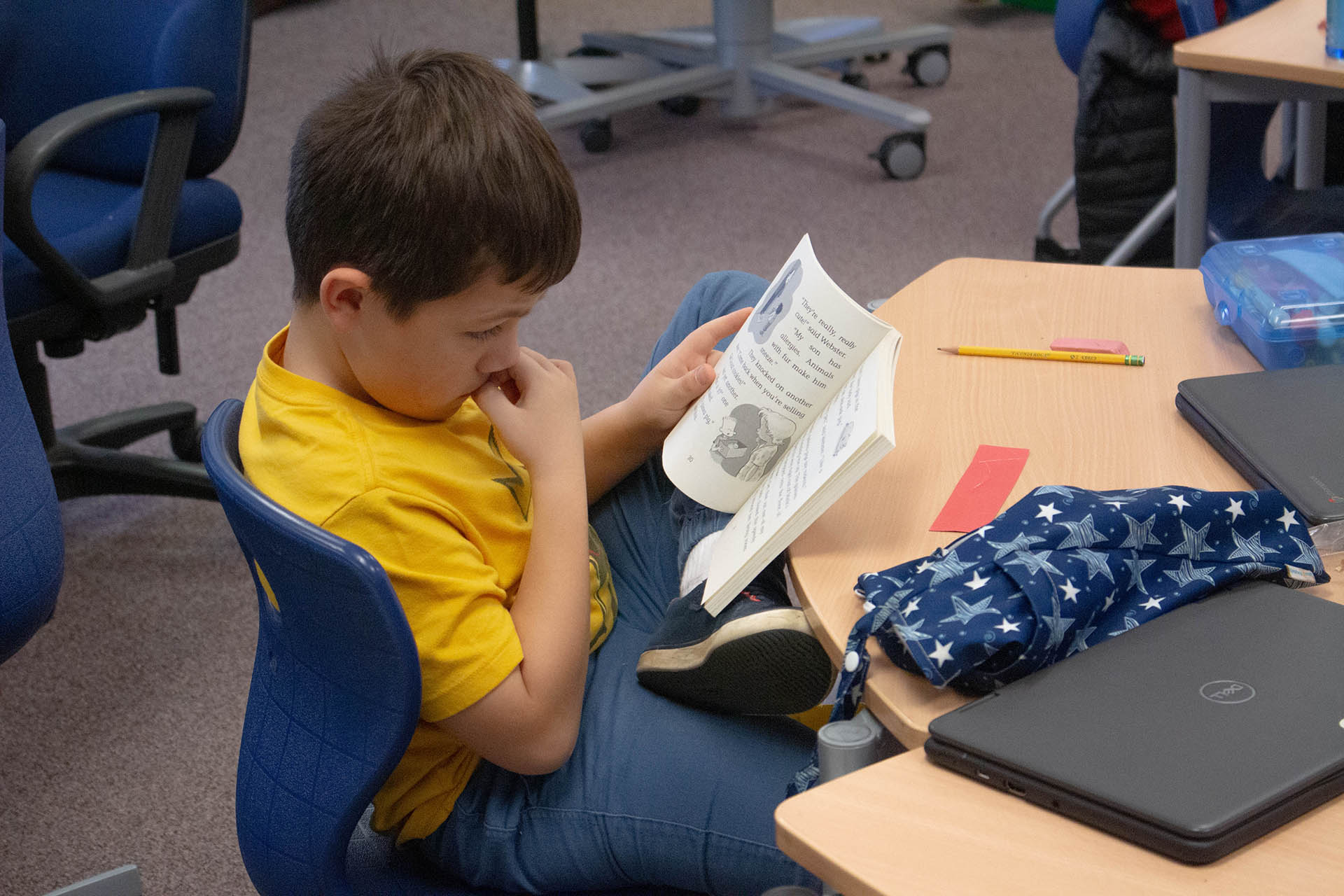 Even with schools closed due to snow, parents and families can still support students’ literacy skills. Thanks to Cville Schools Literacy Coordinator Stacy Reedal for compiling these learning activities!
Writing (and Discussion) Activities
Write a letter (or email) to a friend or relative.
-
After watching a show or movie together:
Create a story for the next episode. You could even do this before watching the next episode and then compare them.
Rate the show on a scale of 1-5 stars! Be sure to state your claim and provide evidence supporting it.
Write a menu for your upcoming meal. Explain the dishes. Encourage the use of descriptive language so that the reader can see and taste the meal.
We have a combination of snow and ice outside on our ground. Write a step-by-step guide for how to best shovel or remove the frozen precipitation from our walkways.
Reading (and Discussion) Activities
Snow days are great times to read. Books allow you to escape the cold, venture to new places, and alleviate some of the cabin fever that may be setting in. Talking with your kids about the books you are reading will increase your child’s comprehension and engagement.
What to read?
You may have books or magazines at home. Re-reading is its own pleasure, including books your child may remember fondly from their younger years.
Get books, videos, and other resources from Jefferson-Madison Regional Library’s free digital library https://jmrl.org/digital-library.
Below are some questions and ideas to support reading:
While reading together, occasionally stop and talk about what has happened. Ask many “why” and “how” questions. For example, why did the character make that choice? or How did that happen? The goal is to talk about the reading and encourage critical thinking. Go beyond retelling what just happened in the story.
Read more than one book and compare them. Look for similarities and differences.
Encourage your child to think like a writer. Talk about the word choices the author used and the reasons for the language.
Learn more about what’s new-to-you in the book. If the setting is a new place, take the time to research or read about the location. If a character shares a new fact, take a moment to research whether the character is correct.
Read a book based on a movie or show that you have watched. Decide which is better and talk about why.
Think of a theme and then read books, poetry, lyrics etc. to support the theme. For example, a snow theme could include texts like Jack London’s "To Build a Fire” and Robert Frost’s “Stopping by Woods on a Snowy Evening”